Coffee Exports Reach USD 8.5 Billion, Processed Coffee Segment Posts Impressive Growth
In the 2025 – 2026 crop year, Vietnam’s coffee exports surged in volume, reaching 1.8 million tons and generating USD 8.5 billion in revenue. Although softer selling prices limited export value growth to just 1%, the processed coffee segment still posted impressive results, contributing USD 1.5 billion to total export turnover.
According to newly released data from the Vietnam Coffee and Cocoa Association (VICOFA), Vietnam’s coffee output in the 2025 – 2026 crop year is estimated at nearly 1.9 million tons, up 6 – 10% from the previous season. Robusta accounted for more than 90% of total production.
From October 1, 2025 to September 30, 2026, coffee exports reached approximately 1.8 million tons, up 21% compared with the 2024 – 2025 crop year. However, export turnover totaled USD 8.5 billion, an increase of only around 1%, mainly because coffee prices had declined from their previous peak levels.
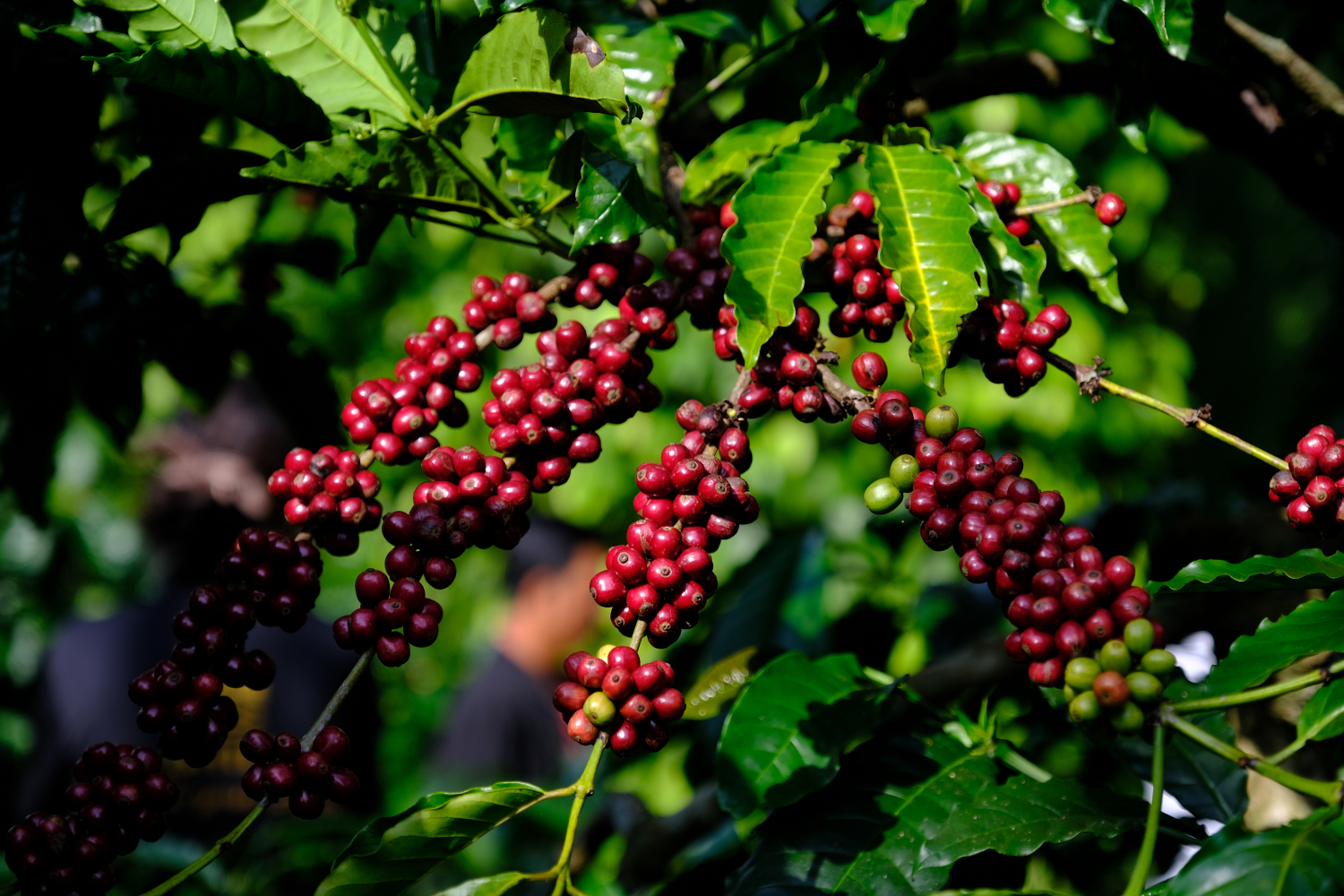
Green coffee continued to account for the majority of export volume, at around 1.65 million tons, generating nearly USD 7 billion. Compared with the previous season, volume in this category increased by 21.4%, while export value declined by 1.5%.
Processed coffee posts positive growth
Price movements throughout the crop year showed increasing pressure as global supply recovered. During the early months of the season, from October 2025 to January 2026, Robusta export prices at Ho Chi Minh City ports ranged between USD 4,800 and USD 5,100 per ton, supported by low inventories and strong delivery demand.
From February 2026 onward, prices began to decline as production prospects in Brazil and Vietnam improved. By May 2026, the average export price had fallen to approximately USD 4,411 per ton. In August and September 2026, prices continued to fluctuate around USD 3,500 – 4,000 per ton.
In the domestic market, by the end of September 2026, coffee prices in the Central Highlands were commonly quoted at VND 93,000 – 93,600 per kilogram, significantly lower than the VND 115,000 – 118,000 per kilogram recorded at the end of 2025.
According to VICOFA, global coffee supply is gradually recovering, placing downward pressure on prices. Meanwhile, many Vietnamese farmers are tending to hold onto their stocks and sell only when necessary rather than releasing large volumes immediately after harvest.
In contrast to the decline in green coffee prices, processed coffee continued to deliver positive results. In the 2025 – 2026 crop year, processed coffee exports reached approximately 142,600 tons, generating USD 1.5 billion, up 15% in volume and 14% in value compared with the previous season.
This result reflects the growing investment by Vietnamese enterprises in higher value-added products, particularly roasted coffee, instant coffee, and other deeply processed product lines.
In terms of markets, the EU remained the largest buyer, accounting for more than 38% of Vietnam’s coffee export volume. The United States and Japan continued to play important roles, while demand from China expanded, particularly for instant coffee.
In addition to product quality, traceability requirements and compliance with environmental standards are increasingly affecting market access. According to VICOFA, coffee shipments that meet the EU Deforestation Regulation (EUDR) may receive a premium of around USD 50 per ton from buyers.
However, Vietnamese coffee exporters are also facing stronger competition from Brazil and Uganda, both of which are expanding production, processing capacity, and Robusta market presence.
According to estimates from the International Coffee Organization (ICO), global coffee production in the 2025 – 2026 crop year reached approximately 183.6 million bags, up 4.4% from the previous season. Meanwhile, consumption is projected to decline by 0.8% to 180.6 million bags.
As a result, global coffee supply is forecast to exceed demand by around 3 million bags, marking a reversal after four consecutive years of market deficits. This development is expected to continue pressuring coffee prices and highlights the growing importance of improving quality, expanding deep processing, and meeting increasingly stringent market standards for Vietnam’s coffee industry.
Export volume rises sharply, but prices fall significantly
According to data from the Customs Department, Vietnam exported 122,700 tons of coffee in September 2026, worth USD 554.6 million, representing increases of 51.3% in volume and 20.1% in value compared with the same period in 2025.
In the first nine months of 2026, coffee exports reached 1.45 million tons, valued at USD 6.57 billion, up 16.3% in volume but down 6.9% in value. The average export price stood at USD 4,524 per ton, down 20% year-on-year. In September 2026 alone, the average price reached USD 4,519 per ton, up 1.1% from the previous month but down 20.6% compared with the same period in 2025.
During the first nine months of 2026, Europe continued to be the main export region for Vietnamese coffee. Shipments to major markets such as Germany, Italy, Spain, and Belgium all increased compared with the same period last year.
In Asia, exports to China reached 54,600 tons, valued at USD 279.6 million, up 48.8% in volume and 53.1% in value. Exports to Japan totaled 95,900 tons, worth USD 473.1 million, increasing by 25.6% in volume but declining by 1.4% in value due to lower export prices.
In the United States, coffee exports reached 103,400 tons, valued at USD 441.2 million, up 46% in volume and 13.8% in value. Meanwhile, shipments to Algeria increased by 6.4% in volume, contributing to broader market diversification.
In October 2026, global coffee prices came under downward pressure as Brazil increased exports. However, the decline was partly limited by shrinking certified Robusta inventories on the ICE exchange and reduced Arabica supply in several producing countries.
In the domestic market, coffee prices also declined during the first half of October 2026 in line with global trends. Limited end-of-season supply and procurement demand for export helped contain the downward movement.
VICOFA expects coffee exports in the final months of the year to improve, supported by new-crop supply and stronger import demand ahead of the year-end consumption season. Demand for Robusta used in blends remains a key supporting factor, creating opportunities for Vietnam to expand market share thanks to abundant supply, competitive pricing, and strong order fulfillment capacity.
However, limited agricultural land, pressure on water resources, unpredictable weather, and rising production costs are making it more difficult to expand supply. In addition, Brazil’s production recovery may ease short-term shortages, but for the market to enter a sustained surplus cycle, new supply will need to remain available for a sufficiently long period to rebuild inventories and meet consumption demand.
Source: https://vneconomy.vn/xuat-khau-ca-phe-dat-85-ty-usd-phan-khuc-che-bien-tang-tuong-an-tuong.htm