
China Rice Market Update – First Half of 2026
Based on the Q2/2026 market report released by the Beijing Municipal Grain and Material Reserves Bureau, along with additional statistics on China’s rice import-export activities and Vietnam’s rice market performance during the first six months of 2026, the following is a summary and outlook for the second half of the year:
1. Overview of the First Half of 2026
China Rice Market
Import Trends
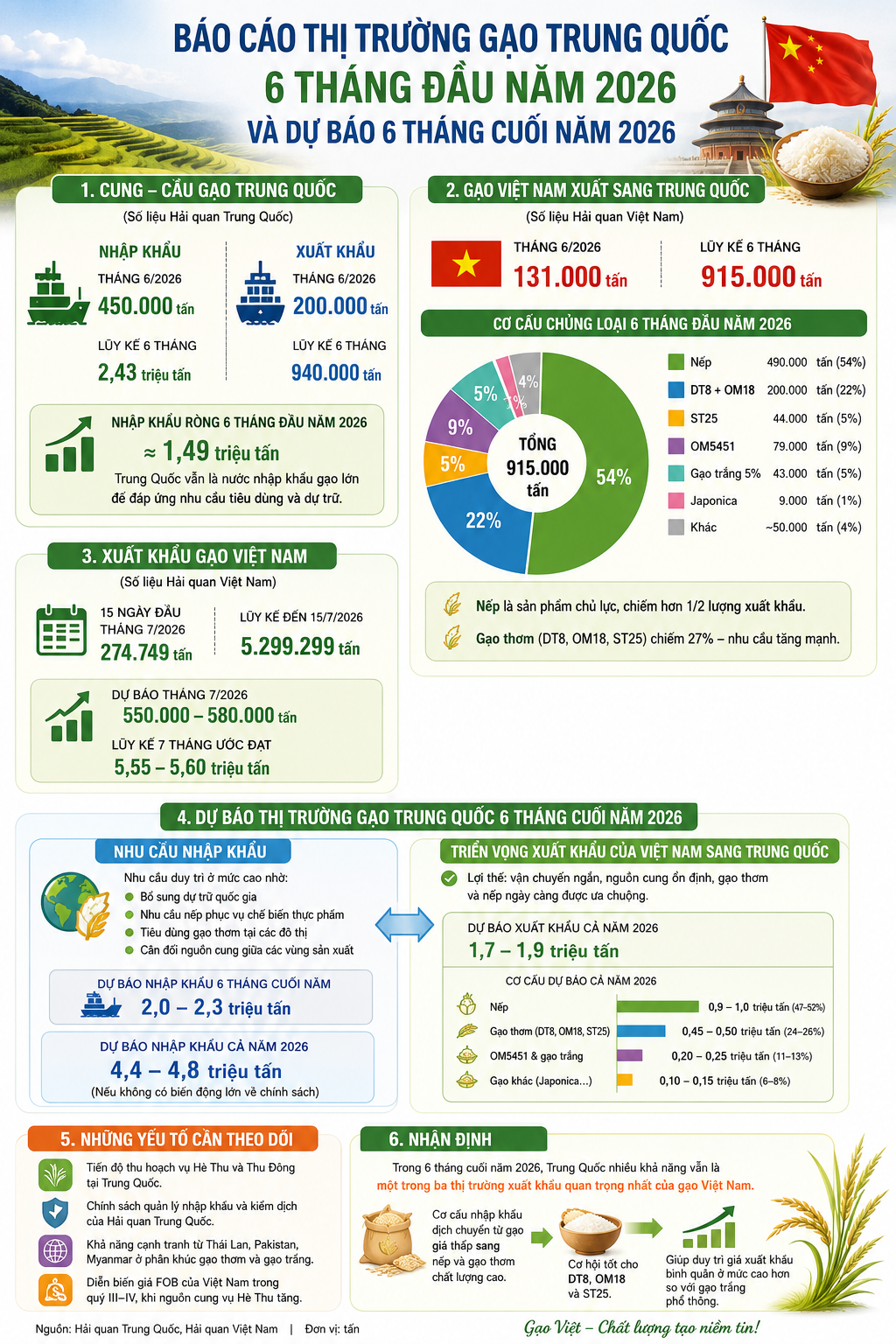
In the first six months of 2026, China imported a total of 2.43 million tons of rice. In June alone, import volume reached 450,000 tons, indicating that import activities remained strong as traders took advantage of the price gap between international and domestic markets.
Export Trends
During the same period, China exported approximately 940,000 tons of rice, including 200,000 tons in June. This reflects China’s flexible export strategy aimed at diversifying export markets and managing domestic inventories.
Domestic Market Conditions
During the first half of the year, China’s rice market faced weak consumer demand and abundant supply, causing prices of japonica rice and indica rice to remain stable or experience slight declines.
Vietnam – China Rice Trade Relationship
Vietnam’s Position
Vietnam continues to play an important role in China’s rice supply structure. In the first half of 2026, Vietnam exported approximately 915,000 tons of rice to China, with a total export value of USD 455 million.
Export Product Structure
Vietnam’s rice exports to China include a diverse range of varieties, including:
- Glutinous Rice: The largest category, accounting for 54% of total exports (490,000 tons).
- Fragrant Rice: DT8/OM18: Representing 22% (200,000 tons); ST25: Accounting for 5% (44,000 tons)
- OM5451 Rice: Representing 9% (79,000 tons).
- 5% Broken White Rice: Accounting for 5% (43,000 tons).
- Other Varieties: Including japonica rice (9,000 tons) and other specialty rice products.
2. Outlook for the Second Half of 2026
China Rice Market Forecast
Supply and Demand
The Chinese rice market is expected to remain in a supply surplus situation, as domestic production is forecast to remain stable and national reserve policies continue to provide flexibility in market management.
Price Outlook
Domestic rice prices are unlikely to experience significant increases in Q3. Prices may face additional pressure when the new harvest season begins toward the end of the quarter.
Import Outlook
Rice import growth may slow during the second half of 2026 as the price gap between international rice and domestic Chinese rice is expected to gradually narrow.
Outlook for Vietnamese Rice
Opportunities
Demand for premium specialty rice varieties from Vietnam, particularly glutinous rice and high-quality fragrant rice such as ST25, OM18, and DT8, is expected to remain stable due to China’s growing preference for higher-value rice products.
Challenges
Unfavorable weather conditions, including the impact of El Niño, may bring increased risks of flooding and storms in rice-growing regions, potentially affecting crop quality during the year-end harvest season.
In addition, competition from other major rice exporters such as India, Thailand, and Pakistan remains significant, as these countries continue expanding and diversifying their export markets.
Strategic Focus
Maintaining a strong portfolio of glutinous rice and premium fragrant rice varieties will remain a key strategy for Vietnam to strengthen its position in the Chinese market, where consumer demand is becoming increasingly specialized in terms of quality and product categories.
Summary
The first half of 2026 highlights the strong connection between rice supply and demand dynamics between Vietnam and China. Although China’s import momentum may slow in the second half of the year due to a narrowing price gap between domestic and international markets, Vietnam’s competitive advantages remain strong.
Vietnamese rice varieties, especially premium fragrant rice and specialty products, continue to benefit from their superior quality, distinctive characteristics, and strong alignment with China’s evolving market preferences.